


 About
About
Bridging the Educational Gap for Refugees: How Amala Education is Pioneering Change
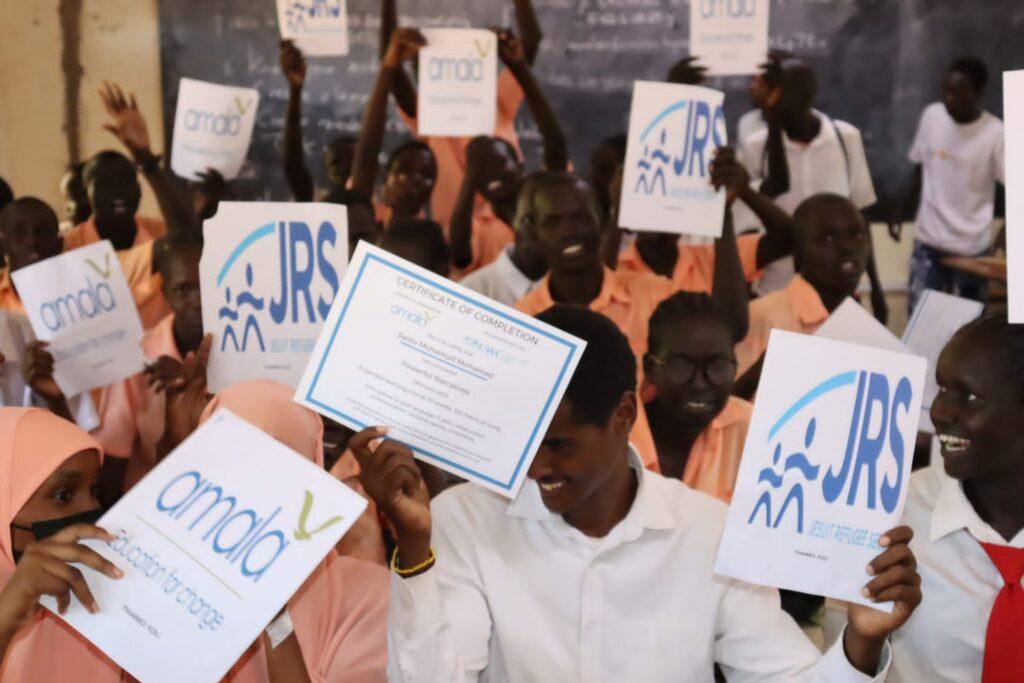
The Global Education Crisis for Displaced Youth
Statistics paint a grim picture: only 41% of refugees are enrolled in secondary education, and a mere 7% have access to higher education. Displaced youth face numerous barriers, including language differences, lack of documentation, and unstable living conditions, which impede their ability to pursue their studies.
Introduction to Amala Education
Amala, formerly known as Sky School, was founded in 2017 to address this critical gap in education for displaced youth. The name "Amala," inspired by the Arabic word for hope, reflects the organization's mission to bring hope through education. Amala believes in the fundamental right of all young people, including refugees, to access quality education.
The need for initiatives like Amala became evident in 2016 when co-founders Polly and Mia worked on a scholarship program for refugees. Despite the program’s success, many applicants were turned away due to limited educational opportunities. Their research highlighted a significant gap in education for refugee youth aged 16–25, many of whom had to abandon their studies due to various barriers.
Amala’s Key Programs
Amala addresses these gaps through two main programs:
The Amala Global Secondary Diploma
This is the first high school diploma specifically designed for and with refugee youth. It provides a pathway for displaced young people to complete their secondary education and is internationally accredited by the Council of International Schools (CIS) and the New England Association of Schools and Colleges (NEASC)
Changemaker Courses
These courses focus on areas such as peacebuilding, ethical leadership, and social entrepreneurship, equipping students with skills to make a positive impact in their communities.
Amala’s programs have transformed lives. Numerous success stories and case studies demonstrate the profound impact of their education. Graduates of Amala have gone on to pursue higher education, secure employment, and contribute meaningfully to their communities.
Challenges in Providing Education to Refugees
Despite the successes, providing education to refugees is fraught with challenges. These include logistical issues, cultural barriers, and limited resources. Amala addresses these challenges through innovative solutions and a flexible educational approach.
Amala’s Educational Methodologies
Amala combines traditional and modern educational methodologies to maximize learning outcomes:
One-on-One Sessions
These personalized sessions allow facilitators to provide tailored support to each student, addressing their unique needs and challenges.
Online Learning via the Aula Platform
The Aula platform facilitates online learning, enabling students to access assignments, notes, and interact with their peers and facilitators, ensuring continuity in their education.
Support Beyond Education
Amala supports its students beyond the classroom. They provide opportunities for further education, training, and employment, ensuring that students can apply their learning in real-world contexts.
Amala’s Strategic Plan 2021-2024
Amala's strategic plan focuses on three main goals:
- Making Education Replicable: Developing models that can be replicated in different contexts to expand their reach.
- Becoming a Widely Recognized Education Provider: Establishing a strong reputation in the education sector.
- Building Organizational Capacity: Strengthening their network of partners and increasing financial sustainability to scale their programs.
Global Reach of Amala
Amala operates in both urban and camp settings across various regions, including Africa, the Middle East, Asia, Europe, and Latin America. This extensive reach ensures that more refugee youth can benefit from their programs.
The true impact of Amala is best seen through the personal stories of its students. Testimonials reveal how education has empowered them, instilling hope and enabling them to rebuild their lives and contribute positively to their communities.
Future Directions for Amala
Looking ahead, Amala plans to expand its programs, explore new regions and innovating in educational delivery. Their focus remains on creating inclusive, adaptable, and impactful education for displaced youth.
Amala’s work highlights the transformative power of education for displaced persons and refugees. By providing quality education, Amala is not only addressing immediate educational gaps but also fostering long-term change and hope for a better future.
By Luka Gatwech Deng
 English
 Arabic
 French
 Spanish
 Portuguese
 Deutsch
 Turkish
 Dutch
Dutch
 Italiano
 Russian
 Romaian
 Portuguese (Brazil)
 Greek
Greek